Developmental Editing for Nonfiction: What It Is and When You Need It
You've finished your draft—or at least a substantial chunk of it—and you know it needs work. But what kind of work, exactly? When you start researching editing services, you'll encounter terms like developmental editing, line editing, copyediting, and proofreading. They all sound like they involve making your writing better, so what's the difference?
If you're writing nonfiction—a memoir, a business book, a self-help guide, a narrative history—you need to understand the distinctions. Hiring the wrong type of editor at the wrong stage is one of the most common (and costly) mistakes writers make. And developmental editing, in particular, is often misunderstood.
You can see why writers get this one wrong: "developmental" sounds like the editor's job is to help you develop your ideas—feeding you questions and providing feedback until the book takes shape. That's not what it means.
So, let's clear that up.
What Developmental Editing Is
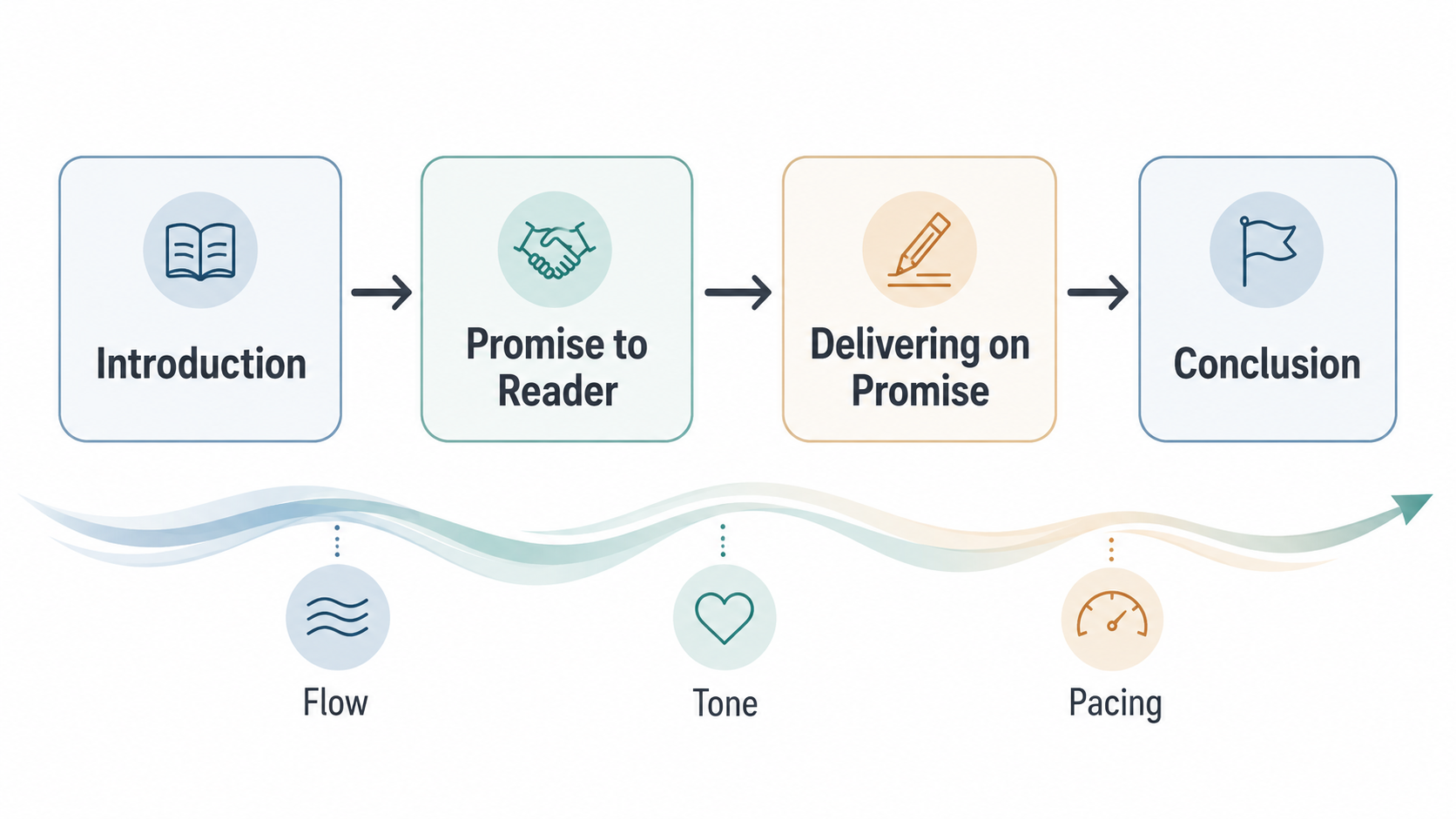
Developmental editing addresses the big-picture elements of your manuscript: structure, argument, pacing, clarity of purpose, and audience alignment. A developmental editor isn't looking at your sentences (that comes later). They're looking at your book as a whole and asking fundamental questions.
Does this structure serve the book's goals? Is the argument coherent and well-supported? Does the pacing keep readers engaged, or do certain sections drag? Is the intended audience clear, and does every chapter speak to that audience? Are there gaps in the logic, missing context, or sections that don't earn their place?
Think of it this way: if your book were a house, developmental editing is about the architecture. Are the rooms in the right places? Does the layout make sense? Is the foundation solid? Is there a staircase leading up to the second floor? You don't want to hang curtains and arrange furniture (line editing and copyediting) in a house that needs walls knocked down.
Scott Norton, author of Developmental Editing: A Handbook for Freelancers, Authors, and Publishers, describes the developmental editor's role as helping authors "discover and realize their intentions." A successful developmental edit clarifies and strengthens the vision you already have.
What a Developmental Editor Looks At
Every nonfiction book has its own challenges, but developmental editors typically focus on several core areas.
Structure and organization. Nonfiction books live or die by their structure. Your reader needs to feel oriented—to understand where they are, where they're going, and why each section matters. A developmental editor examines whether your chapters are in the right order, whether sections within chapters flow logically, and whether the overall arc of the book makes sense.
This is especially critical for books built around frameworks, methodologies, or arguments. If you're a consultant writing about your approach to leadership, for instance, your reader needs to understand each concept before you build on it. A developmental editor catches those moments where you've assumed knowledge your reader doesn't have yet, or where you've buried a key concept in the wrong chapter.
Argument and evidence. Nonfiction makes claims, and those claims need support. Whether you're drawing on research, case studies, personal experience, or client stories, a developmental editor evaluates whether your evidence actually supports your arguments—and whether your arguments are clear in the first place.
This isn't about fact-checking (though that matters too). It's about logical coherence. Does your conclusion follow from your premises? Have you addressed obvious counterarguments? Are there leaps in logic that will make skeptical readers disengage?
Audience alignment. One of the most common problems in nonfiction manuscripts is a mismatch between the book and its intended reader. Sometimes the author is writing for experts when the book is meant for beginners. Other times, the tone is too academic for a general audience, or too casual for a professional one.
A developmental editor helps you see your book through your reader's eyes. They ask: Who is this book for, and does every chapter serve that reader? Research on effective communication consistently shows that audience awareness is one of the strongest predictors of whether a message lands. As cognitive psychologist Daniel Willingham puts it, "the mind is not designed to think—it's designed to save you from thinking." Your reader won't do the work of figuring out why your book matters to them. You have to make it clear.
Pacing and engagement. Nonfiction doesn't get a pass on being engaging just because it's informational. Readers still need momentum. They need to feel like they're making progress, learning something new, moving toward a destination.
Developmental editors identify where your manuscript drags—where you've over-explained, repeated yourself, or lost the thread. They also spot where you've rushed, glossing over material that deserves more attention. Pacing problems often stem from structural problems, which is why this level of editing needs to happen before you start polishing sentences.
Signs You Might Need Developmental Editing
Not every manuscript needs developmental editing. But here are some indicators that yours might.
You're not sure if your structure is working.
You've organized your chapters in a way that makes sense to you, but you're uncertain whether a reader will follow. Or you've reorganized multiple times and still aren't confident.
Feedback has been confusing or contradictory.
Beta readers or writing group members have given you feedback, but it's all over the map. Some say the book is too long; others say it needs more detail. Some love Chapter 3; others find it boring. When feedback is inconsistent, it often signals a structural issue that readers sense but can't quite articulate.
You know something's off, but you can't put your finger on it.
The book doesn't feel right, but you've been too close to it for too long to see why. You need an outside perspective—someone who can read with fresh eyes and diagnostic expertise.
Your book has a complex argument or framework.
The more intricate your content, the more important structure becomes. If you're presenting a methodology, a theory, or a multi-part argument, developmental editing helps ensure that complexity serves your reader rather than overwhelming them.
You're writing your first book.
First-time authors often underestimate how different book-length writing is from articles, blog posts, or reports. The architecture of a book requires skills that take time to develop. Working with a developmental editor on your first project is an education in itself.
When You Might Not Need It
If your structure is solid, your argument is clear, and your feedback has been consistently positive on the big-picture elements, you might be ready to skip straight to line editing. Some writers—especially those who've written multiple books or who have backgrounds in journalism or academic writing—have internalized structural thinking. They've already done the developmental work themselves.
The key is honest self-assessment. If you're uncertain, a developmental editor can often tell within the first few chapters whether your manuscript needs deep structural work or just refinement at the sentence level. Many editors offer manuscript evaluations—a shorter, less intensive read-through that assesses what kind of editing your book actually needs.
What the Process Looks Like
Developmental editing is collaborative. It's not a situation where you hand off your manuscript and get back a "fixed" version. Instead, you typically receive a detailed editorial letter addressing the big-picture issues, along with comments throughout the manuscript pointing to specific passages where those issues show up.
Then comes the revision. You take the feedback, sit with it, and decide what you want to change. Sometimes that means reorganizing chapters. Sometimes it means cutting sections that aren't working or writing new material to fill gaps. The editor's job is to diagnose and guide; the revision work is yours.
This is why developmental editing often happens earlier in the process than people expect. Ideally, you want a developmental edit before you've polished every sentence to a shine—because polished sentences in a chapter that needs to be cut, moved, or substantially rewritten are wasted effort.
Finding the Right Editor
Not every editor offers developmental editing, and not every developmental editor works with nonfiction. When you're evaluating potential editors, ask about their experience with your genre and subject matter. Ask how they approach developmental feedback—do they provide an editorial letter, in-line comments, or both? Ask about their revision philosophy. You want someone who will push you to do your best work while respecting your voice and vision.
The right developmental editor doesn't rewrite your book. They help you see it more clearly so you can rewrite it yourself, with confidence.
Your Next Step
If you're wondering whether your nonfiction manuscript needs developmental editing—or if you're not sure what kind of editing it needs at all—I'm happy to talk it through. Sometimes, a short conversation is all it takes to get clarity on where you are in the process and what kind of support would actually help.
Sources
Norton, Scott. Developmental Editing: A Handbook for Freelancers, Authors, and Publishers. University of Chicago Press, 2009.
Willingham, Daniel T. Why Don't Students Like School?: A Cognitive Scientist Answers Questions About How the Mind Works and What It Means for the Classroom. Jossey-Bass, 2009.