Signs Your Nonfiction Manuscript Is Ready for Editing (or Not Quite Yet)
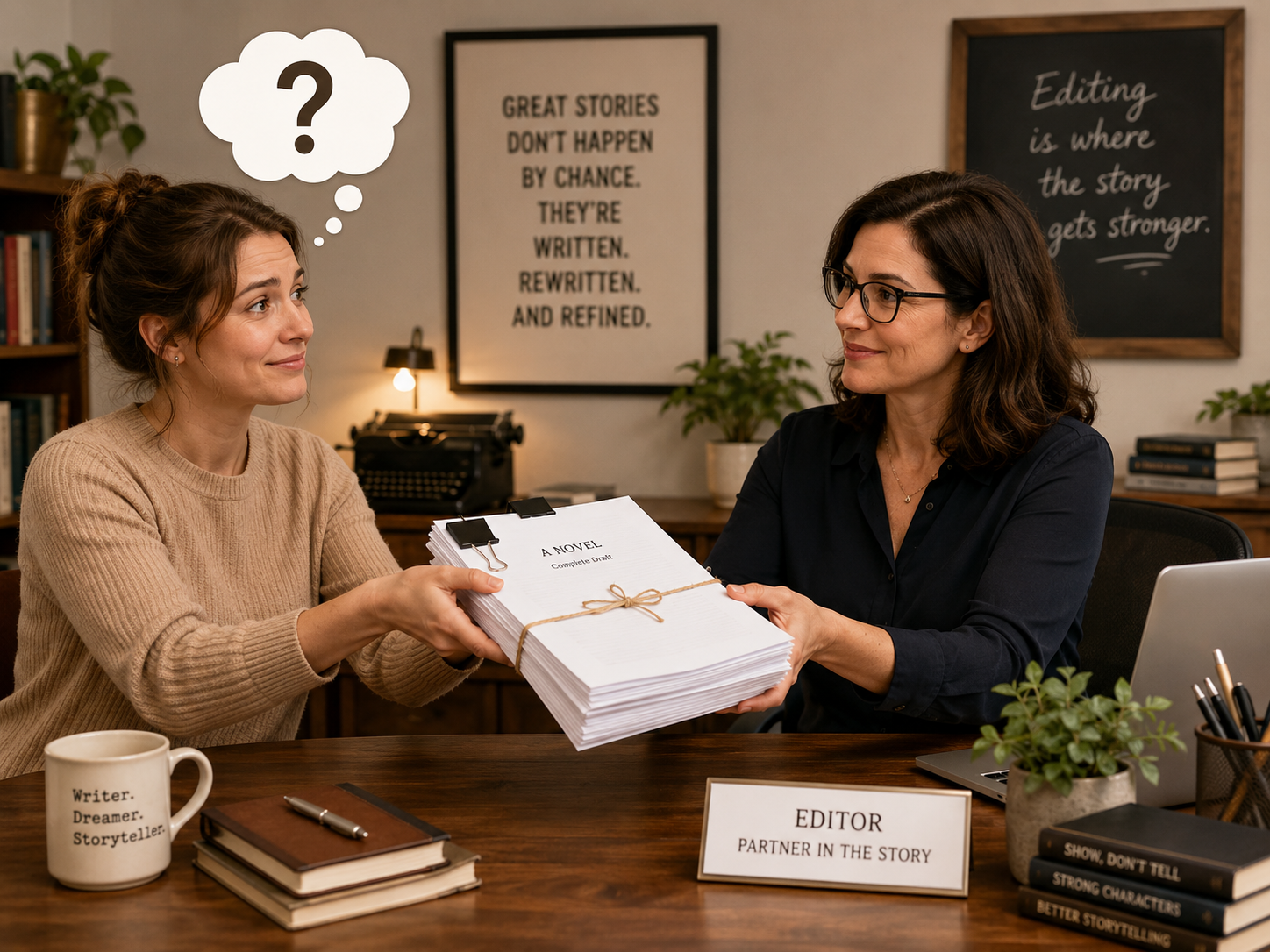
Every writer hits the same crossroads eventually. You've poured months—sometimes years—into your manuscript, and now you're staring at it, wondering whether it's time to bring in a professional or whether you'd just be handing over a draft that isn't there yet.
It's a fair question, and knowing when to hire an editor matters more than most writers realize. Bring one in too early, and you risk paying someone to point out problems you or a beta reader could have caught—or worse, paying for careful work on material you end up cutting anyway. Wait too long, and you can spend months spinning your wheels, polishing a manuscript that needs an outside set of eyes to move forward.
After years of editing nonfiction, I've gotten pretty good at reading the signals on both sides. And almost every writer I work with says the same thing afterward: they wish they'd known the signs sooner. Here's how to figure out where you stand.
You've Finished a Complete Draft
This is the big one. Before you hire an editor, you need a finished draft—beginning, middle, and end. It just has to be complete, not polished.
I can't tell you how many writers reach out when they're a third of the way in, hoping an editor can help them figure out where the book is going. I understand the impulse. But editing a partial manuscript is like asking a contractor to inspect a house with no roof and half the walls still missing. There's not enough there to assess. Finish the draft first, however rough it turns out. A messy, complete manuscript gives an editor something real to work with.
If you are absolutely stuck in the last third of your book but you are clear on its trajectory, then you would need a writing coach—not an editor—to help you get to the end.
You've Already Revised at Least Once
A first draft fresh off the keyboard is not going to be ready for professional editing—unless you’re Stephen King. Countless successful writers say that writing is revision, revision, revision. I just took David Sedaris’s MasterClass, and he said he will rewrite the opening of a short story 14 times before he is convinced he has the right version. Sedaris is a prolific, seasoned writer. You’d think it would come to him, maybe by the third try. But 14 times! In the class, he showed some of the opening rewrites that didn’t make the cut, and even though they were beautifully written, they didn’t create the setup that he was going for. That’s why writing is truly a craft.
If you’re feeling urgency, this next thing may be hard to do, but it works. Step away from the manuscript for a week or two, then come back and revise with fresh eyes. That distance lets you catch the rambling sections, the point you accidentally made twice, the place where you buried your real insight under three paragraphs of throat-clearing.
And if you haven't done a self-editing pass yet, that's your next move, not hiring an editor. (I walk through exactly how to approach this in my post on self-editing your manuscript). Handing over a draft you've already tightened means you're paying for refinement instead of cleanup.
You've Taken It As Far As You Can
You've read the manuscript so many times, you can no longer tell what's working. You've revised it, reorganized it, gone back and tinkered some more, and now you're just moving commas around. Something feels off, but you can't name it.
You’ve just hit the wall of self-editing. You know your material so well that you've lost the ability to read it as a stranger would, which is exactly the perspective a book needs before it goes out into the world. When you hit that wall, it's a strong sign you're ready for an outside reader.
You Know What You're Asking For—Or You're Ready to Find Out What You Need
You don't need to walk in with a perfect diagnosis. But it helps to have a sense of whether you're after big-picture structural feedback, sentence-level polish, or a final proofread. These are different services at different price points, and matching the right one to your manuscript's actual stage saves you real money. If you're unsure which you need, that's a conversation worth having before any work begins. (My breakdown of the different editing types is a good place to start sorting that out.)
So those are the green lights. Now for the other side.
You're Still Making Major Changes
If you're rethinking your structure, cutting whole chapters, or debating what the book is even about, you're not ready—and that's completely fine. Questions like these are worth resolving before line-level work begins, because there's no sense in perfecting prose that might not survive the next round of revision. Sometimes a developmental editor is the right partner for this stage. But if you're still in the process of shaping the book, give yourself room to do that work first.
You're Looking for Reassurance More Than Feedback
Be honest with yourself here. Are you hiring an editor because your manuscript needs sharpening, or because you want someone to tell you it's good? I say that with affection, because every writer feels the pull. Editing is a process of making your work better, which means it involves hearing what isn't landing yet. If you're not in a headspace to receive that, a little more time might serve you better than a little more money.
You're Hoping the Editor Will Do the Hard Part
A good editor diagnoses and guides. They don't write your book for you. If part of you is hoping to hand off a thin draft and get back a finished manuscript, that expectation will disappoint everyone involved. The revision is yours. An editor helps you see it more clearly so you can do it well.
When You're Somewhere in Between
Most writers don't land cleanly in one camp. You've finished a draft and revised it once, but you're still uneasy about the structure. You've taken it as far as you can, but you're not sure it's far enough. That uncertainty is common, and it's exactly where a conversation helps to clarify where you are and what you need. You don't have to figure that out alone.
Not Sure Where You Stand?
If you've read this far and you're still uncertain whether your manuscript is ready for editing, that uncertainty is worth talking through. Reach out, and let's figure out where you are in the process and what kind of support would move your work forward.