How to Outline a Nonfiction Book (With Templates and Examples)
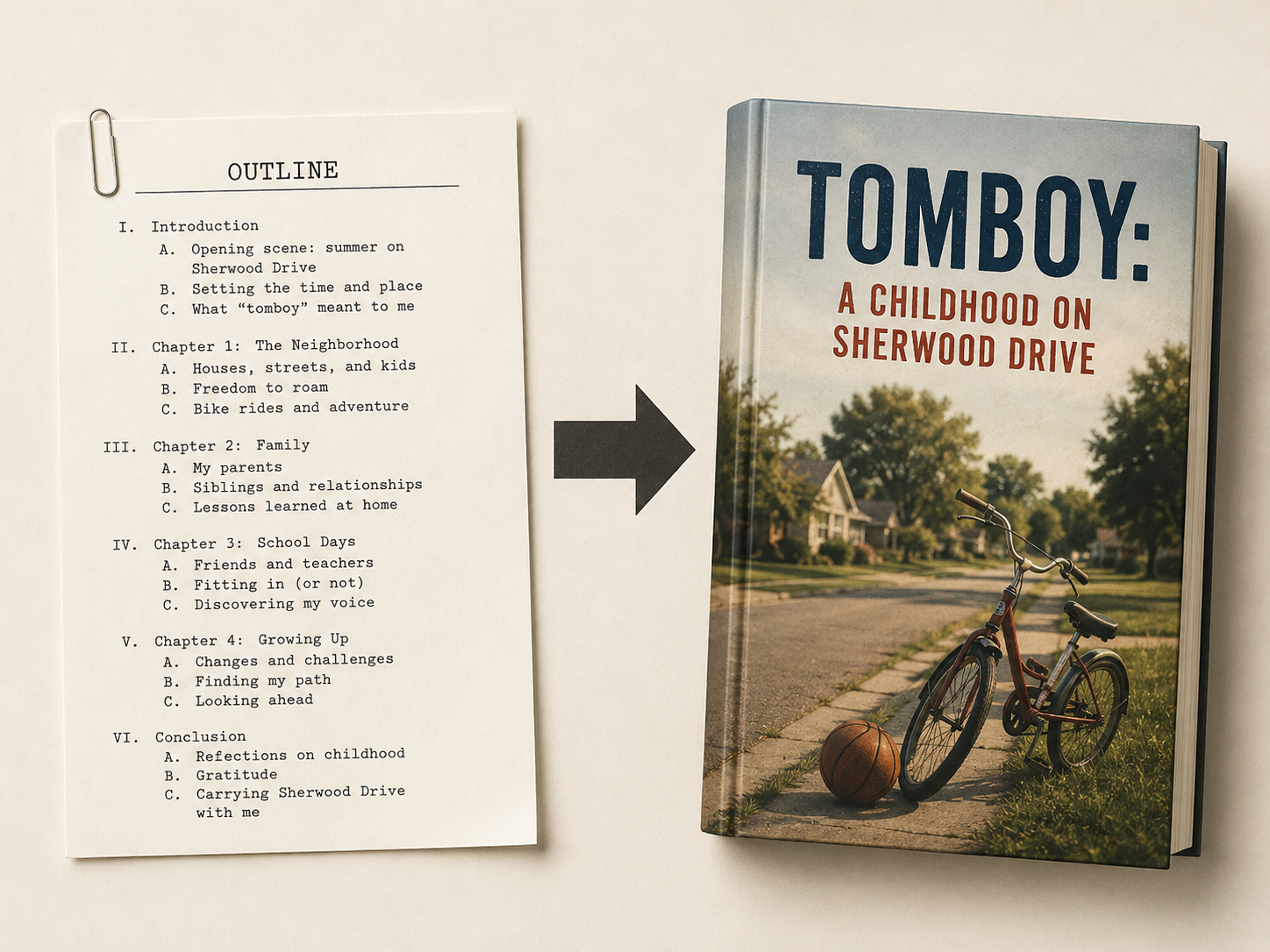
You have a book in you. Maybe you've been turning an idea over in your head for years. Maybe you finally sat down to write—and realized you have no idea where to start.
Here's the thing: sitting down to write a nonfiction book without an outline is like driving cross-country without a map. You might eventually get there, but you'll waste a lot of time, make wrong turns, and probably want to quit somewhere around Kansas.
After nearly a decade of editing nonfiction—memoirs, business books, guides, and everything in between—I've watched writers struggle with the same problem over and over. They know what they want to say. They just don't know how to organize it. A solid outline solves that problem before it derails your entire project.
Why Outlining Matters More Than You Think
An outline isn't just organizational busywork—it's your defense against writer's block, scope creep, and the dreaded abandoned manuscript. British author Tony Buzan, who popularized mind mapping techniques in the 1970s, understood that our brains don't naturally think in linear sequences. They jump from idea to idea, making connections that don't always follow a straight line. An outline helps you capture that natural creative process and then shape it into something a reader can follow.
More practically, an outline reveals structural problems before you've written 30,000 words. I've seen writers realize mid-draft that their chapter three should actually be chapter eight, or that they've accidentally written three chapters about the same concept. An outline catches these issues when they're still easy to fix.
Start With Your Core Message
Before you outline a single chapter, you need to answer one question: What is this book actually about?
I don't mean the topic. I mean the argument. What do you want readers to understand, believe, or be able to do after reading your book? Write it in one to three sentences. This becomes your North Star—every chapter should connect back to it.
For example, a book about productivity isn't really about productivity. It might be about how small daily habits compound into significant life changes. A memoir about addiction isn't just a chronicle of events—it's about resilience, identity, or the complicated nature of family. Get specific about what you're really saying.
Three Proven Outline Structures
Not every nonfiction book follows the same structure. The right framework depends on what you're writing and who you're writing it for. Here are three that work across most nonfiction genres:
Problem-Solution Structure
This framework works beautifully for self-help, business books, and how-to guides. You establish the problem your reader faces, explore why it exists, and then walk them through the solution. Most of your content lives in the solution section, broken into actionable steps or principles.
Chronological Structure
Memoirs, biographies, and historical nonfiction often benefit from a timeline-based approach. You move through events in sequence, using time as your organizing principle. That said, strict chronology isn't mandatory—many memoirs open with a pivotal moment before circling back to the beginning.
Thematic Structure
Some books organize around key themes or principles rather than time or problem-solving. Each chapter explores a different facet of your central idea. This works well for essay collections, philosophical explorations, and books that examine a topic from multiple angles.
A Simple Template to Get You Started
Here's a basic chapter outline template you can adapt for your project:
Chapter Title: [Clear, specific title that signals the chapter's focus]
Core Point: [One sentence describing what this chapter accomplishes]
Opening Hook: [How will you draw readers in? A story, question, or surprising fact?]
Key Sections: [Three to five main points or subtopics you'll cover]
Supporting Evidence: [Research, anecdotes, examples, or data you'll include]
Transition: [How does this chapter connect to the next?]
Work through this template for each chapter before you start writing. You don't need elaborate detail—bullet points are fine. The goal is to know where you're going before you set out.
The Mind Map Method
If traditional outlines feel too rigid, try mind mapping. Start with your book's central idea in the middle of a blank page. Draw branches outward for major themes or chapters. From each branch, add smaller branches for subtopics, examples, and supporting points. This visual approach lets you see connections between ideas and often reveals structural possibilities you wouldn't have noticed in a linear list.
When Your Outline Will Change (And That's Okay)
Here's something nobody tells you: your outline is a living document. It will change as you write. You'll discover that one chapter needs to become two, or that a section you planned doesn't actually serve your argument. That's not failure—that's the writing process working exactly as it should.
The outline gives you a starting point. It means you're never staring at a blank page, wondering what comes next. But it's not a contract. Give yourself permission to revise it as your book takes shape.
The Last Word
A good outline transforms the overwhelming task of writing a book into a series of manageable steps. It's the difference between building a house with blueprints and building one by guessing where the walls should go. Take the time to map out your structure before you dive into drafting. Your future self—the one who actually finishes the manuscript—will thank you.
Ready to move from outline to draft? Check out my post on "How to Start Writing a Nonfiction Book: A Clear, Practical Roadmap" for the next steps in your writing journey.
Sources
Buzan, Tony. The Mind Map Book: How to Use Radiant Thinking to Maximize Your Brain's Untapped Potential. Plume, 1996.